

Goodbye Goodison Park
As English football mourns the loss of one of its great grounds, what can heritage tell us about how supporters balance their love for traditional footballing homes with a need for change?

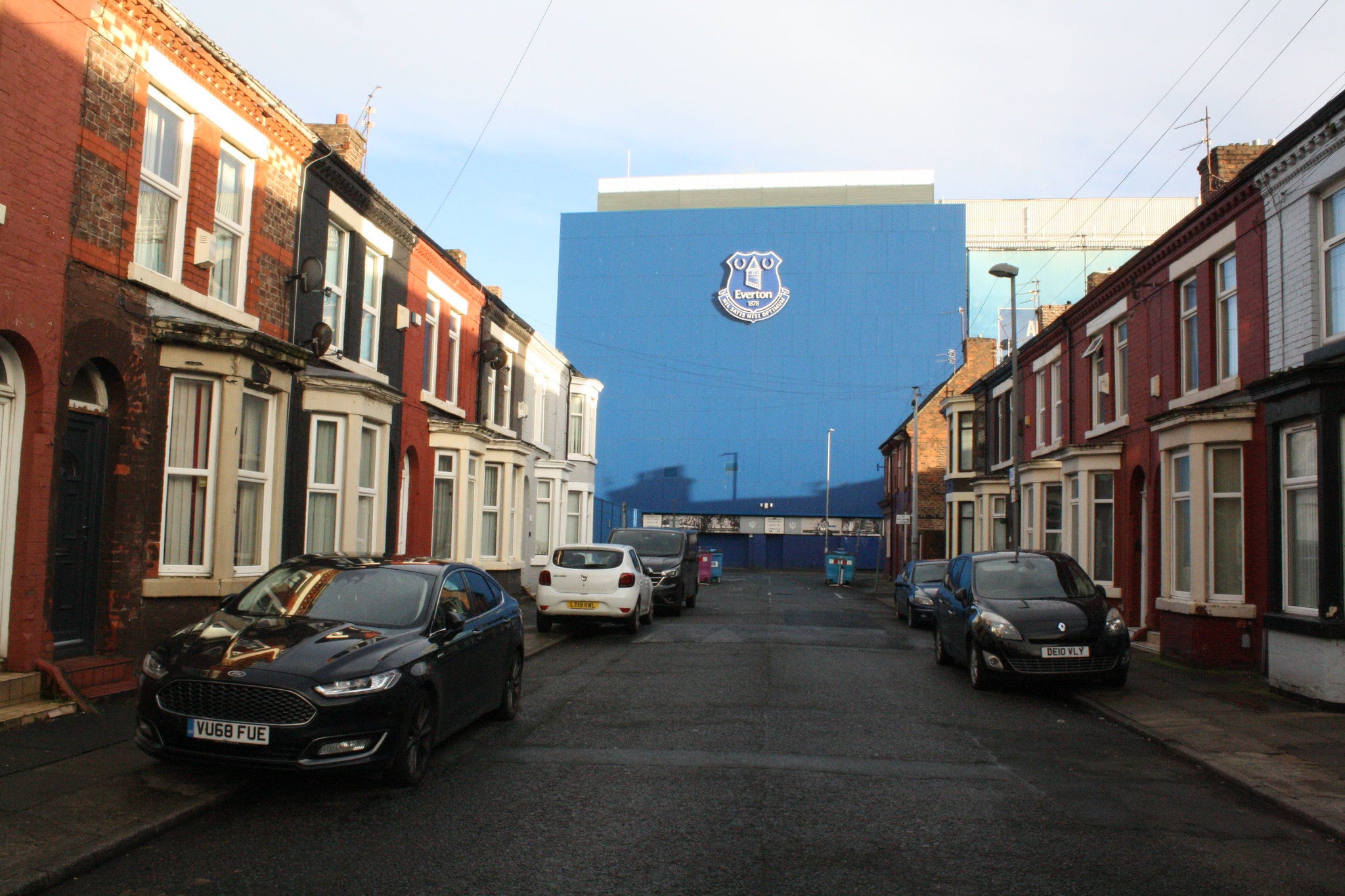
After 133 years, it’s time to say goodbye to one of the great cathedrals of English football.
With Everton set to make a move to a new state of the art arena at Bramley-Moore Dock, this Sunday’s fixture with Southampton will see the “Grand Old Lady” of Goodison Park put to rest.
It’s going to be a week of celebration and nostalgia in equal measure.
Wistful editorials will fly across the footballing press. Personal memories and testimonies from supporters will illuminate television and social media feeds. And on Sunday, as the theme from Z Cars strikes up one last time and Everton take to the pitch to the tremulous roar of the Goodison crowd, tears will be shed.
Though I’m no Toffee, Goodison has always been one of my absolute favourite footballing spaces. As a heritage scholar, it’s a site that typifies that abstract notion of “football heritage” more than any other – at least in England.
It’s a mystical space in which the sense of layered history is palpable, a creaking old pirate ship haunted by a century of ghostly memory. Every broken wooden seat, every nook and cranny of its ramshackle terracing seems to hold a whisper of Evertonian heroism, hedonism or heartbreak.
It’s not a stadium – it’s the archetypical football ground.
Given my traditionalist orientation, you’d be forgiven for assuming that I may wish to add to the symphony of dewy-eyed op eds that will be pouring out from every corner of the footballing press this week.
But as I grapple with the twinned notions of continuity and tradition in football in my academic work, Everton’s impending relocation gives me an interesting opportunity to consider how we understand supporters’ capacity to deal with change in a footballing context.
To start grappling with this topic, I want to draw out three vignettes from my last visit to Goodison Park...
It’s December 2023, and I’m at Goodison to observe Newcastle supporters for my PhD. Having made a manic journey down from the Northeast, I duck into the away end 15 minutes before kick-off. I shuffle through the ancient turnstiles and take a breath before plunging into the baying throng of travelling Geordies before me. I pray their body warmth will give me momentary respite from the biting Merseyside frost.
But as I settle into the warm embrace of the Bullens Road Stand, a crushing sense of claustrophobia overcomes me. With swirling rain and frost awaiting on the terraces, even the hardiest of the 3,000 travelling Newcastle supporters are staying on the concourse. And it’s busy. Very busy.
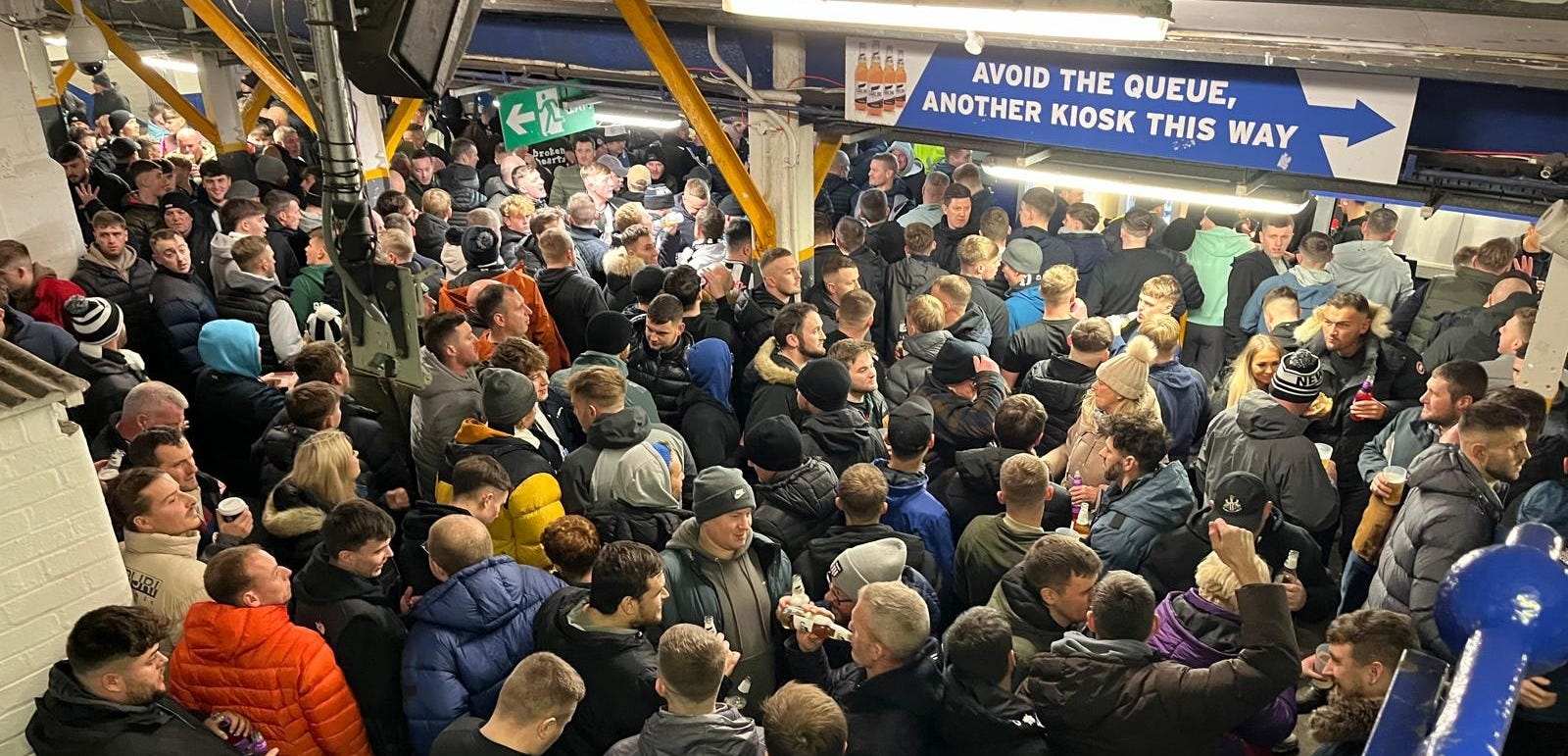
As I fight through the crowd to get my grubby mits on an overdue cup of Bovril, I’m stopped in my tracks by the sheer density of bodies in front of me. I struggle to lift my arms, which are snapped by my side, to try and protect my chest. Then – just for a moment – I lose control. I’m squeezed between jostling bodies and feel my feet lift off the ground. Spooked, I turn back and gingerly make my way to my seat. As I subsequently wrote in my fieldwork diary, it’s one of the only times I’ve ever felt truly in danger at a football ground, even if only for the briefest of moments.
I’m deeply frustrated. Having been excited to reacquaint myself with the unique charms of one of my favourite grounds, instead, its status as a completely inappropriate venue for contemporary elite football has been highlighted in the most visceral terms possible.
I can’t shake the notion that despite my hatred of the new flatpack arenas popping up around the rest of the country, such a bottleneck crush of bodies simply wouldn’t happen anywhere other than a decrepit old wreck like Goodison.
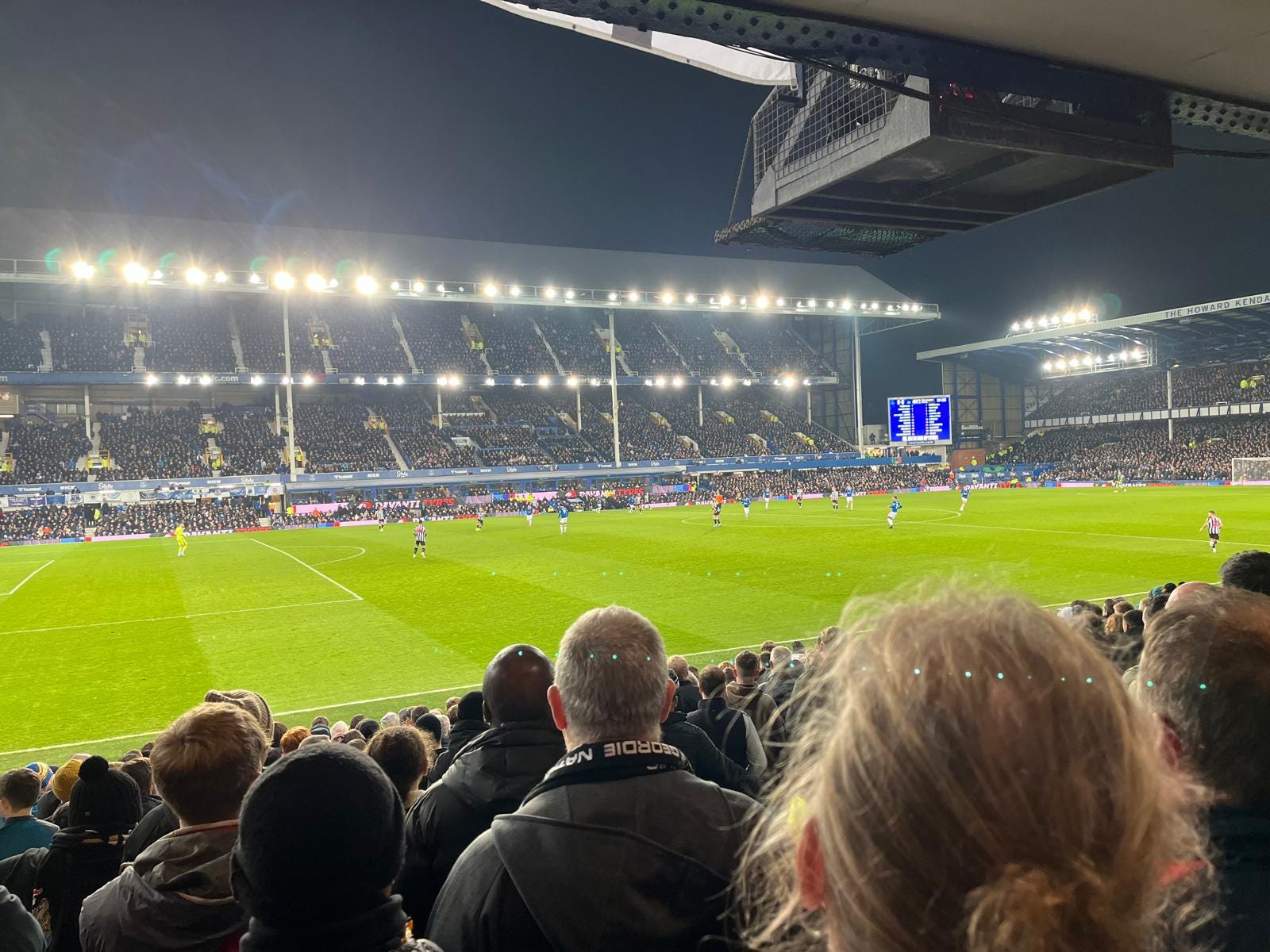
Two hours later, and the game is reaching its climax. I have been distracted from the pre-match drama by a bruising, physical 80 minutes of football under the floodlights. The stakes are high. Everton are defending a 1-0 lead and desperate for three points to lift them out of the relegation zone.
With the febrile atmosphere reaching a boiling point, the pivotal moment in the game arrives.
Having already made an awful error for Everton’s opener, Newcastle full-back Kieran Trippier inexplicably slips on the ball. Jack Harrison pounces, driving to the touchline before squaring a tantalising cutback to the edge of the box. The ball squirms beyond a forest of outstretched legs into acres of open space.
A pregnant pause. Goodison holds its collective breath.
38,000 eyes widen in unison as giant midfielder Abdoulaye Doucouré strolls onto the loose ball. A beat of silence. Doucouré rifles the ball past Martin Dubravka. The net bulges.
Carnage.
As ten blue shirts cartwheel away in celebration, I scan around Goodison and drink in a panorama of chaos. The Gladys Street End is a writhing pit of humanity – a deafening, otherworldly spectacle straight from a Hieronymus Bosch painting. The very concrete floor I stand on seems to tremble from the sheer force of joy surrounding me on all sides.
Despite having attending upwards of 700 matches in my lifetime, the intensity of those celebrations remain some of the most potent images of footballing joy that I can conjure – my default image when I think about the very concept of “limbs”.
Hidden in the midst of the despondent Toon Army, I bury my chin into my chest and stifle a smile. Having provided a frightening display of its aging, dated constitution just two hours previously, Goodison has just re-asserted why football supporters around the country love it so much.
Quite simply, this ground has a unique aura. As a football fan who treasures the sense of intergenerational connection football engenders, Goodison is truly one of the only spaces I can be immersed in an atmosphere I feel my Grandad may have experienced following Albion in the 50s and 60s.
Just as I’m sure the pre-match crush couldn’t have happened at any other elite level stadium in the UK, so too I’m sure the chaotic second goal scenes are completely unique to the few venues like Goodison that remain.
There is something about the layered, constitution of the Grand Old Lady. The way the stands seem to bow and loom over the pitch, the verticality of spectators stacked up as though in a chest of drawers, the way in which the closed in corners mean the huge noise from the Gladys Street End can’t escape into the night sky, but reverberates around and through you.
It is truly timeless.
Exhilarated and exhausted in equal measure, I stagger from the ground. I exchange an eye-roll and a hug with my Newcastle supporting acquaintances, pull my scarf over my face and set off into the freezing mist towards my hostel in Liverpool city centre.
As I shuffle head-bowed along the Scotland Road, I become aware of a looming presence over my right shoulder. It’s Tony – an old-timer Toffee on cloud nine – and he wants to know what I thought of the game.
We skate over the standard conversational fare: “what did you think”, “what a job Sean Dyche has done”, “I’m actually a neutral”, “West Brom fan? I remember when you beat us in the ’68 Cup Final” and so on.
Then, conversation turns to the Grand Old Lady herself. I ask how he’s feeling about Everton’s impending move from Goodison. Still high on the celebratory carnage of the second goal, I brace myself for a soul warming soliloquy about home, tradition and nostalgia. Tony lets out a world weary sigh, and then surprises me with his response:
“It’s tough, but I think I’m ready to let go”.
He tells me that Goodison will always be home – not just for Everton Football Club, but for himself and generations of his family who have been making regular pilgrimages to the blue corner of Stanley Park since the 1940s.
But though Tony’s deep, romantic nostalgia for Goodison is clear he maintained a surprisingly critical faculty when talking me through the decision.
He explained how the ground was falling apart, and in a wider footballing context in which revenue generation is more essential than ever – he recognises the club’s need to move on to pastures new.
He may not have liked it, but Tony could establish a sense of peace with the move by conceptualising it as completely necessary for the future of the club he loved so much.
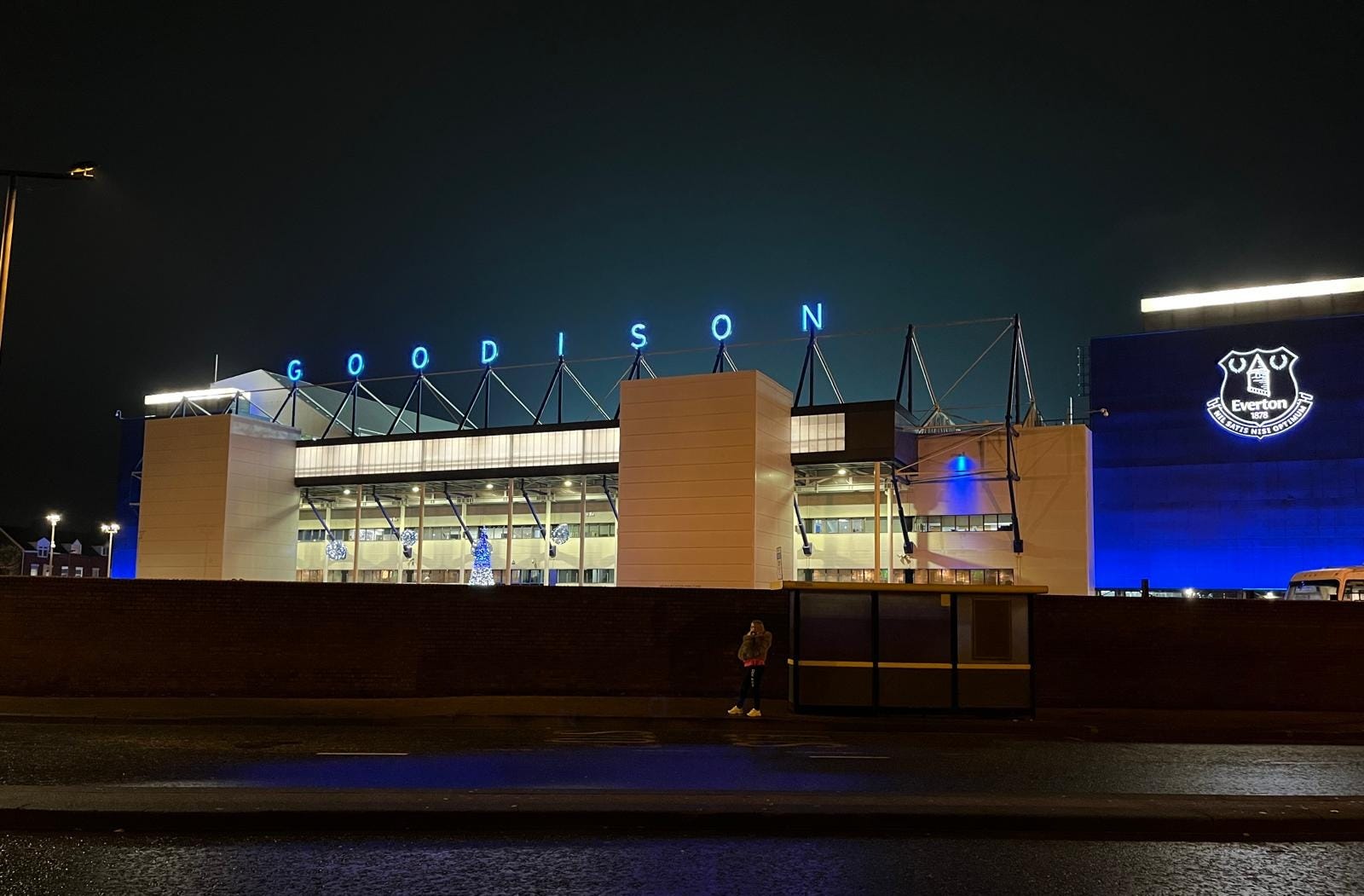
As I reflect back on that bitingly cold evening eighteen months ago, it strikes me that my final trip to Goodison represented the bubbling up of three interwoven emotional undercurrents that are at play when any team leaves their spiritual home.
On one hand, there is the stark truth that Goodison is simply not up to standard for the rigours of modern football; the pragmatic, stony reality that there is a constant need for modernisation and change if stadia are to serve their communities. On the other is the romantic sense that the emotional connection, atmosphere and sense of layered history attached to Goodison will simply be irreplaceable at any new stadium.
Between these two poles lie the supporters, stretched between the opposing forces of emotion and logic as they try to make sense of the loss of their collective spiritual home.
To me, it is this third element that is the most interesting.
Given that football fans are often typecast as overly nostalgic romantics who cherish the “good old days”, what has struck me in the lead up to Everton’s move is the way in which the supporters I spoken to have been able to grasp those two seemingly competitive forces of nostalgia and logic together.
Clearly, Goodison Park is a deeply meaningful, resonant home for Evertonians. It is what Pierre Nora would call a lieu de memoire1 – a site of memory. But it’s also true that whilst Goodison represents the material crystallisation of over a century’s worth of experiences, it does not represent the sum of club’s story.
Whilst Goodison may remain a cherished site of pilgrimage and resonance, Evertonians seem ready to let go and move on to a new chapter of the club’s story, one in which Toffees can be proud of the club’s state of the art new stadium and exciting new direction.
Whilst no new stadium will be able to create the strength of affective ties and emotionality of Goodison in the short term, those memories will be layered up over the course of the coming decades as the Bramley-Moore Dock site becomes the backdrop for a multiplicity of experiences for supporters. Thus, for supporters like Tony, the meaning and connection supporters have with Everton does not die with the physical stadium space itself.
It may not be easy to say goodbye to a cherished old home, but if one cuts through the emotionality and nostalgia of the discourse around Goodison this week, it’s possible to find a critical mass of more pragmatic voices who are excited about what the new ground will mean for the Toffees.
Here then, lies the most important lesson Goodison can tell us about the nature of heritage in a footballing context.
Though sites such as Goodison are deeply resonant to communities of supporters, the physical sites – stadia, pubs, statues, monuments – that are traditionally seen to constitute football heritage are always secondary to the continuation of a living culture of football support.
In this sense, we should strive to see football heritage not as bound up in the material essence of creaking old stadia. Rather, we should see spaces like Goodison as reflections and representations of this broader culture.
In the context of this understanding, perhaps we can collectively become more accepting of change to the material landscape of football, especially when it takes our culture of football support into exciting new spaces.
Nora, P. 'Between Memory and History: Les Lieux de Memorie', Representations, No. 26 (1989), 7-24.