

Saints to Sinners
Why Southampton's comeuppance is a moment to savour

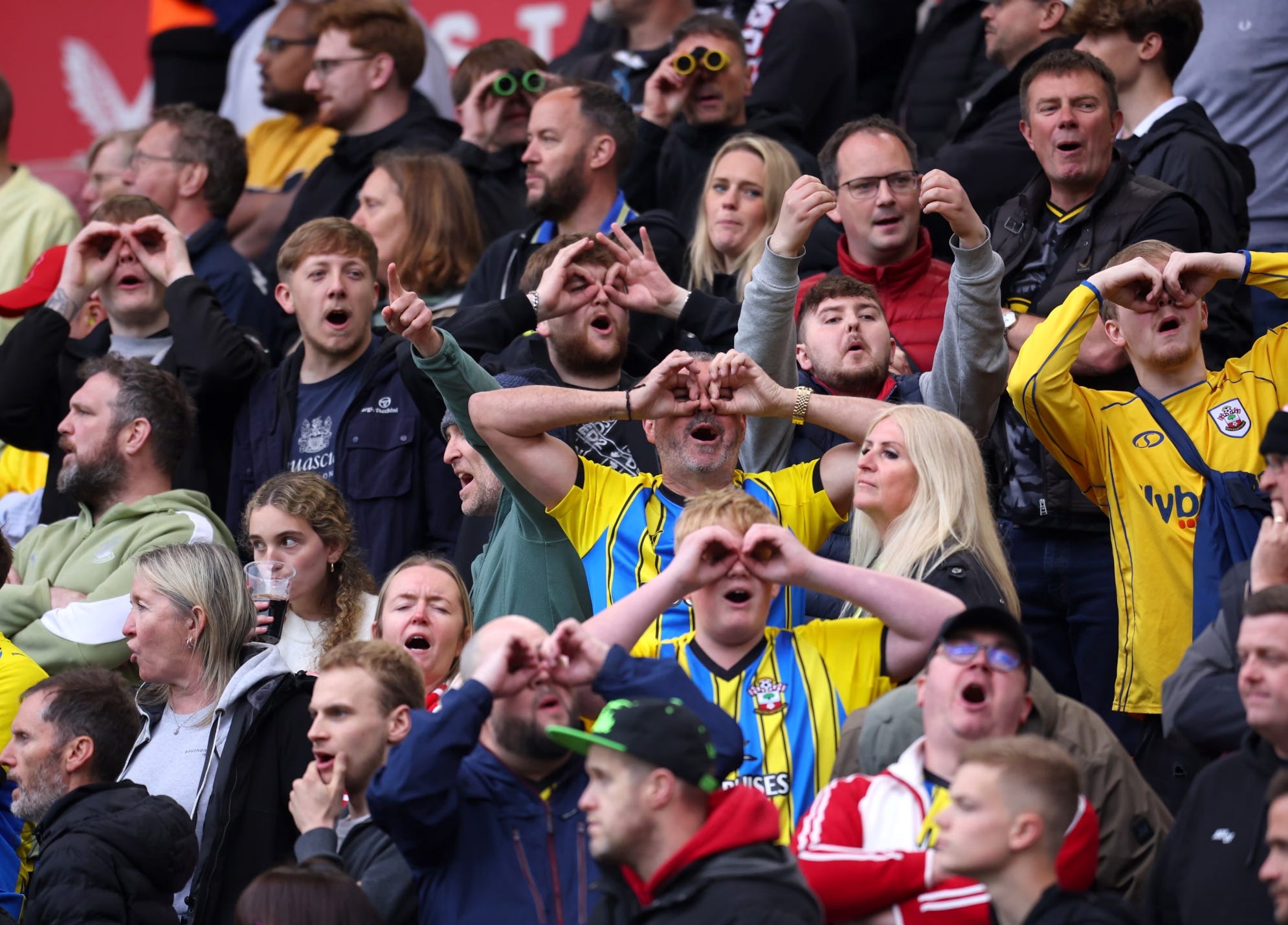
For once, the cynical hellscape of modern football has delivered something akin to justice.
Twelve days after Southampton sent a junior staff member to spy on a Middlesbrough training session ahead of a crucial play-off semi-final, the EFL have shocked the footballing world by growing a spine and coming down on The Saints like a tonne of bricks.
Ever since news broke of “spygate”, speculation has been rife as to what the punishment would be. Perhaps a fine? A suspended points deduction?
The EFL response? An unprecedented punishment.
Just days after defeating Middlesbrough in the semi-final, Southampton have been kicked out of the play offs. They will also face a four point deduction ahead of next season.
That means no trip to Wembley. No £200million promotion war chest. The Premier League dream is dead, in the most inauspicious of circumstances (pending Southampton’s inevitable appeal on Wednesday).
It’s a decision I find pleasing on a number of levels.
Firstly – and most importantly – it is incredibly satisfying to see Southampton’s cheating meet cold, hard consequences.
I should note from the start that I reserve huge sympathy for the majority of Saints fans. Despite a brainlessly tribal minority who have been openly celebrating their club’s conduct, social media has been replete with the testimony of Saints who are disgusted at their club.
However, over the previous two weeks, the collective actions of Southampton’s management, staff and players have justifiably turned them into the pantomime villains of English football.
There have been the patronising micro-aggressions of Southampton’s media team, directing smarmy ire at any journalist who deigned to fulfil their professional obligation to question the club on the allegations.
There were the various disgraceful scenes during Southampton’s second leg victory last Tuesday, from attacks on the team bus, to club captain Taylor Harwood-Bellis’ one-man variety performance of vindictiveness, shithousery and (alleged) discriminatory language.

And standing in the eye of the storm - staring into space like a lizard trapped in the body of a P.E. teacher - has been Southampton’s manager, Tonda Eckert.
A fish rots from the head, and it’s fair to say that Eckert has navigated the past two weeks with a dead-eyed reptilian charmlessness I’ve rarely seen in elite football management.
Batting away questions in interviews with twitchy rudeness. Responding to reports of Harwood-Bellis’ discriminatory language with irritation and aggression. Eckert has looked every inch a man who feels the walls closing in around him.
Perhaps nothing speaks to the moral decay at the core of this Southampton regime than the identity of the alleged spy himself.
Of course, no senior member of staff had the courage to carry out any clandestine operation themselves. Instead, it appears the grim duty fell to a young intern.
Let us consider the invidious circumstances that led this intern to his darkly comic hiding spot behind a tree on Teesside.
It is worth remembering that we are talking about a student. This is a young man clawing his way up the greasy pole, trying to get a break in the game he loves, desperate to make a positive impression. It feels as though his eagerness to please may have been cynically exploited. It would appear he has been forced into an impossible position by more senior members of staff, all of whom were too cowardly to personally enact their own attempts to cheat.
Since being photographed, identified and named in the press, the intern in question has deleted all presence on social media. One hopes that he will receive the support and protection he needs over the coming weeks.
More importantly, let us hope he does not become an easy scapegoat for this whole sordid affair. Let the finger of blame point to those who exploited his vulnerability as an expendable intern to enact their clear attempts to cheat.
Knowing now what we do about the way the club is currently run, I have my doubts.
But beyond the schadenfreude of comeuppance, the punishment handed to Saints is not simply satisfying because rules were broken. It matters because it represents a rare moment where integrity has triumphed over the inherent cynicism of modern football.
As the game becomes more commercial, contemporary football increasingly operates according to depressingly a simple principle: if something offers an edge, clubs will pursue it until they are forced to stop.
Financial loopholes, opaque ownership structures, data manipulation, aggressive tapping-up, ethically dubious sponsorships. Football has spent years slowly normalising behaviour that would once have provoked outrage. Winning has become not merely the priority, but the justification for almost anything.
Without consequences, football drifts further into an individualist world of moral nihilism. Tribal loyalties are ruthlessly exploited to undermine collective standards of behaviour. Supporters are told to accept that “everyone does it” and that ethics are merely obstacles to success.
The danger is not simply corruption itself, but the normalisation of corruption. We are frogs in boiling water. Once supporters internalise the idea that integrity is irrelevant, the emotional foundation of football begins to collapse.
But whilst the ruthless pursuit of success at any cost increasingly defines the governance of football, it remains true that supporters do not invest their lives into following expecting relentless victory.
They do so because they believe, however irrationally, that clubs still stand for something larger than profit margins and tactical gains. Loyalty, identity, fairness and collective pride remain central to why football matters on a cultural level. If the game abandons those ideals, it risks becoming a husk of what made it great.
Against this context, Southampton’s punishment serves as a reminder that rules are not entirely decorative. It signals that there are still limits.
Certain forms of behaviour violate the sensibility and cultural fabric of the game to such an extent that they cannot simply be absorbed into the sport’s endless cycle of tribalistic rationalisation and PR spin.
I am not so naïve to assume that football was ever a jerusalem of fair play and moral purity. Football has always encompassed dark arts, gamesmanship, corruption and hypocrisy. But there is a difference between imperfections existing within football and competitive cynicism becoming the game’s driving logic.
The harsh judgement meted out to Southampton will not reverse football’s drift into market-driven hyper-competitive cynicism. The sport remains dominated by financial inequality, commercial excess and a neoliberal ethic of institutional self-interest.
But as a football supporter who believes in the potential of the game to encompass and embody higher values – morals even – this judgement is a moment to savour.
Moments like this matter because they preserve the idea that football should aspire to standards beyond pure brutal competitiveness. In an increasingly cynical footballing world, even the smallest victories for morality feel unusually important.
Great stuff Josh, genuinely one of the best Substack football articles I’ve read, so much of it resonated. I’ve been wondering myself in recent times - what the hell is going on in football? This sport that should be one of life’s enjoyments ever more reeks of controversy, greed, and corruption. The sense of fair play and respect that once existed is now replaced by a win at all costs, chase the (exorbitant amounts of) money attitude that leads to the kind of behaviour that Southampton have now rightly been punished for. I’m all for strong punishments when it comes to law breaking, crime should never pay, so like you I’m glad the EFL have thrown the book at Saints. I also can’t see how the manager remains in charge after this, he’s disgraced himself and a famous club.
A really great article. The punishment does fit the crime. Southampton sought to gain an unfair advantage in the play off section of the season and therefore it is completely sensible that the play offs is the arena for the clubs punishment. It remains to be seen whether this will deter this type of offence or ( more likely) refine it.